Briefs, angles & creative research
Turn your offer, audience insights, brand guidelines, and approved claims into useful creative directions. Prepare hooks, scripts, moodboards, and storyboards for review.
Add a hands-on creative to your agency. Hire a remote AI creative specialist for concepts, images, video, and ad variations—with the design judgment and finishing skills to turn a brief into work your team can use.
Prefer to talk? 213-714-7445

A person behind the possibilities
An AI creative specialist combines creative production skills with generative AI tools to turn briefs into images, videos, and other campaign assets.
They explore directions, choose useful outputs, and refine the work with design, editing, and storytelling skills. For an agency, the value is a person who can move between an idea, the production tools, client feedback, and the final handoff.
Teams use titles such as AI Creative, AI Creative Producer, AI Content Creator, and AI Creative Strategist. The work varies. A strategist shapes what to say and test; a producer makes and finishes assets; a technical creative may also build more complex production systems.
Boogie helps define the responsibilities first, then looks for the portfolio and experience that fit. A remote arrangement gives you someone working inside your agreed tools and process, wherever their desk is.
What they take off your plate
Give production and iteration a clear owner. Build the role around the formats, client accounts, and level of creative direction you need.
Turn your offer, audience insights, brand guidelines, and approved claims into useful creative directions. Prepare hooks, scripts, moodboards, and storyboards for review.
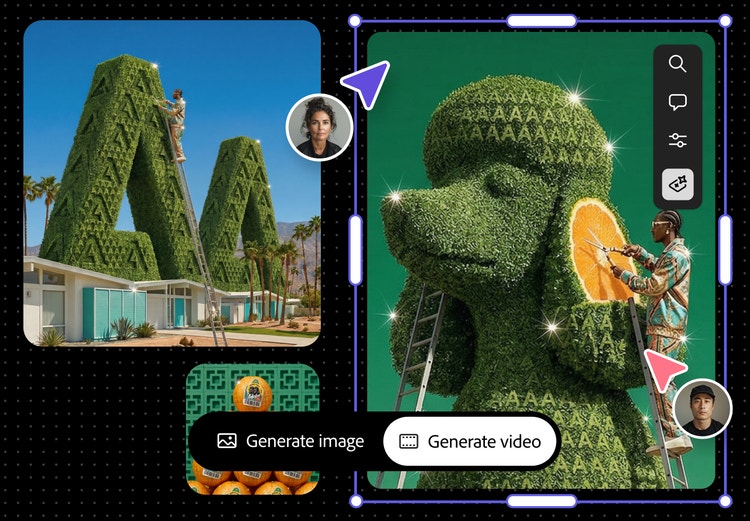
Develop image concepts, backgrounds, compositions, and product scenes with the agreed tools. Select promising outputs and refine them with design judgment and manual editing.
Create or adapt suitable clips, sequence scenes, and combine generated material with supplied footage. Check motion, continuity, framing, and how the story lands.
Prepare agreed versions of a concept: different openings, messages, visual treatments, or formats. Keep the test variable and version names clear for your media buyer.
Improve layout, typography, pacing, captions, audio, and brand consistency. Deliver files ready for your review and handoff.
Prepare approved narration, subtitles, and format or language adaptations where the hire has the experience. Review pronunciation, timing, and meaning.
Maintain reusable briefs, approved references, prompts, templates, and source files. Keep each client’s assets and review notes easy to find and separate.
Track revisions and creative variables. Use the findings your strategist or media buyer shares to inform the next brief and production round.
Define the scope before hiring. Original filming, advanced motion design, media buying, and custom technical pipelines require the right skills and available time. Tools and credits do not make every production task instant.
What this looks like inside an agency
Explore how the work can fit your agency. These are illustrative assignments, not client results or promised output volumes.
The brief: Keep the offer and audience fixed. Explore a new hook for the next ad test.
The work: Prepare hook directions, a short storyboard, supporting visuals, and an edited variation.
The handoff: Supply approved exports, source files, version names, and a short explanation of the changed variable.
The review: Your strategist or media buyer reviews the test setup and results with the creative.
The brief: Explore a visual direction using the approved product, references, and message.
The work: Prepare a moodboard, explore image treatments, then refine the chosen compositions and typography.
The handoff: Supply reviewed campaign visuals, required sizes, editable source files, and approved references.
The review: Your design lead checks craft and consistency before client approval.
The brief: Turn approved campaign material into short-form content for the agreed channels.
The work: Build short sequences, adapt framing and copy, and review captions, audio, and continuity.
The handoff: Supply labeled platform versions, captions for review, source files, and notes on approvals.
The review: Your account lead or content strategist reviews the message and publishing plan.
Good tools. A creative who knows how to use them.
We screen for practical experience with the tools your workflow needs. Here are five examples across image creation, motion, audio, and finishing.
Explore image directions, visual treatments, and compositions from a creative brief.

Develop visual references and generated material within an agreed Adobe workflow.
Create and refine suitable media, with repeatable production workflows where useful.

Prepare approved voice and audio material, then review pronunciation, pacing, and delivery.

Finish video with editing, captions, sound, pacing, and the required exports.
The toolset is agreed for each role. Subscriptions, credits, available features, client approvals, and file ownership should be clear before work starts. Product examples do not imply partnership or endorsement.
Audience, offer, references, formats, and the person who approves the work.
Build concepts and rough material. Pick the direction worth developing.
Apply design and editing judgment. Review the assets against the brief.
Hand over approved versions and use findings to shape the next brief.
Match the person to the work
Develop the angle, creative hypothesis, brief, and testing priorities. Collaborate with the people making assets and running campaigns.
Turn an agreed brief into visual and video assets. Own exploration, refinement, production organization, and delivery.
Support an established workflow through asset organization, template adaptations, resizing, version tracking, and clearly defined tasks.
A hybrid role can combine responsibilities when the candidate has the experience and the workload is realistic. Advanced automation or model pipelines may require a technical creative or developer.
What you receive
Agree on deliverables, not a vague promise of “more content.” A scoped assignment can include:
Your team should know which assets are ready, what needs approval, and which part of the idea changed.
A working day with your creative
An example rhythm for a remote role. Match the routine to your agency’s hours and review process.
Confirm the brief, client account, source assets, deadline, and open feedback.
Develop concepts, generate suitable material, and refine the selected direction.
Discuss the work with the designated reviewer, strategist, designer, or media buyer.
Update the board with files, decisions, approvals needed, and the next step.
What a strong hire looks like
A polished reel is a starting point. Discuss their contribution, a scoped assignment, and an acceptable finished handoff.
Your first month
A new video concept, an image adaptation, and a complex campaign are different workloads. Set expectations from real assignments rather than counting generations.
Explore the remote onboarding guide →Who we are
Local understanding.
Global possibility.
Your everyday advantage.
We’re Boogie. A Los Angeles-based remote staffing team connecting businesses with professionals in the Philippines and Latin America.
We help turn “we need an AI creative” into a role that can be recruited for: the formats, portfolio, tools, hours, and level of ownership your team needs.
Boogie handles sourcing, screening, and shortlisting. You meet suitable candidates and choose who joins your team. You lead creative priorities, while we support onboarding and the working relationship.
Start with one person. Add support as your client workload grows.
Meet the people behind Boogie →“Boogie helped us create and execute a clear hiring game plan.”
Gary Gruen · FrontLight Insurance
Read the client story →
Why hire with Boogie?
We separate direction, production, editing, and support so the role matches your agency’s needs.
Include portfolio formats, design and video experience, AI workflow knowledge, communication, and account organization in the requirements.
We handle sourcing and shortlisting. You focus on meeting people who fit the brief and choosing your hire.
Your creative works in your tools and review process, with your guidelines and priorities.
Boogie helps coordinate onboarding, check-ins, and concerns throughout the working relationship.
Discuss part-time or full-time support, time-zone overlap, and the ownership you need before starting.
How hiring with Boogie works
Show us your formats, briefs, workload, tools, hours, and budget.
Agree the balance of strategy, production, design, editing, and support.
Review portfolios and discuss how candidates approach the work.
Set the first assignment, access, reviewer, deliverables, and updates.
Before you hire
Bring a sample of the creative work you need. We’ll help define the right person for it.
Get a quote ↗An AI creative specialist combines creative production skills with generative AI tools. They turn briefs into concepts, images, videos, or other assets, then select, refine, and finish the work. The role needs judgment, storytelling, and an understanding of the brand.
Depending on scope, they can prepare concepts and storyboards, generate and edit visual material, build videos, create ad variations, and organize the handoff. Define client accounts, formats, review rounds, and tools before hiring.
A strategist focuses on the audience, message, creative hypothesis, and what to test. A producer makes and finishes assets. A hybrid role can cover both when the person has the experience and the workload allows it.
Virtual describes remote delivery, not a skill level. A creative virtual assistant can support an established process. A specialist or producer may also develop directions, make production decisions, and maintain the workflow. Hire against actual tasks and portfolio.
Match the background to your deliverables. Image and layout work needs design fundamentals. Video needs editing, pacing, audio, and visual continuity. Tool familiarity alone does not demonstrate the ability to finish client-ready work.
Start with your workflow and required file formats. Midjourney, Adobe Firefly, Runway, ElevenLabs, and Adobe Premiere are examples across production. Other tools may fit better. Agree accounts, plans, credits, and source-file access before starting.
Yes, with realistic hours and clear priorities. Provide a separate brief, brand reference, asset folder, and reviewer for each account. Set limits for simultaneous projects so feedback and deadlines remain manageable.
Media buying is a separate responsibility. Your creative can prepare assets and use findings your buyer shares. Campaign setup, budgets, targeting, and account optimization need relevant experience and explicit scope or a separate specialist.
This can be part of an experienced role. Define the approach, approved scripts, disclosures, and permissions first. Synthetic scenes should not be presented as genuine customer experiences. Human filming and creator coordination are separate needs.
Provide guidelines, approved claims, references, and asset-use instructions. Agree which tools may receive client material, who reviews outputs, and how versions and source files are stored. Keep approval with your designated reviewer.
Your quote depends on experience, hours, formats, complexity, and creative ownership. Discuss subscriptions, credits, licensed assets, and other production costs separately. Share representative deliverables so Boogie can help define the role.
Yes. A defined queue can suit part-time support. A fuller client roster or combined strategy and production may need more hours. Share your time zone and required overlap for the candidate search.
There is no universal number. An adaptation differs from a new concept or finished video. Agree a sample workload, quality standard, review rounds, and available tools. Measure approved deliverables and time before setting recurring capacity.
Ask for work relevant to your formats and audience. Discuss the brief, the person’s contribution, what was generated, what they edited manually, and why they chose the direction. Include revisions and how files were prepared for delivery.
Bring references, an example brief, approved assets and claims, tool requirements, and your reviewer. Begin with one scoped assignment, review the result, and agree the production rhythm. Add complexity after quality and handoff standards are clear.
No. Creative quality is one part of performance. The offer, audience, landing page, delivery, measurement, and other factors matter. Use a clear testing plan and relevant business outcomes to decide what to develop next.
Build the right creative team
Meet your everyday advantage
Hire a remote AI creative specialist or producer around the work your agency needs. We’ll help you find your person.
Get a quote ↗Prefer to talk? 213-714-7445